
When a contract, manual, invoice, or regulatory file arrives as a scan, translation cannot start efficiently until the text becomes usable. OCR solutions turn non-editable content into editable text, helping teams reduce delays, control costs, and prepare documents for multilingual delivery.
Key Takeaways
- OCR solutions convert scanned PDFs, images, and paper files into editable, searchable text that can be translated.
- Robust ocr software is critical for legal, financial, and technical projects where source files are often non-editable.
- OCR accelerates document management, invoice processing, and cross-border compliance by reducing manual retyping.
- Tools such as tesseract ocr, adobe acrobat, cloud vision, and microsoft azure improve accuracy when combined with professional translation services.
- Foliage Solutions integrates OCR into end-to-end localization workflows and can collaborate with specialized OCR solutions providers.
What Are OCR Solutions and Why They Matter for Translation
Optical character recognition is software that “reads” text in images, scans, and PDFs so it can be edited, searched, and translated. In multilingual projects, Optical Character Recognition is often the first step before a translation company can use CAT tools, terminology databases, or translation memories.
OCR solutions convert printed, handwritten, or scanned physical documents into editable, searchable machine-readable text. Optical Character Recognition (OCR) enables the conversion of various types of documents, such as scanned paper documents and images, into machine-encoded text, supporting easier data management and downstream data processing.
The difference is simple: Word, InDesign, or HTML files already contain editable text; scanned documents, photos, and image-based PDFs do not. Typical 2024–2026 use cases include cross-border contracts, regulatory submissions, legacy technical manuals, archived invoices, medical claims, and other documents that create language barriers if they stay locked as images.
Document digitization involves turning paper records or non-searchable PDFs into editable text that can be highlighted and indexed. Foliage Solutions has built standardized OCR-driven processes to support quality, layout preservation, and reliable document conversion before translation begins.
How OCR Fits into a Modern Translation Workflow
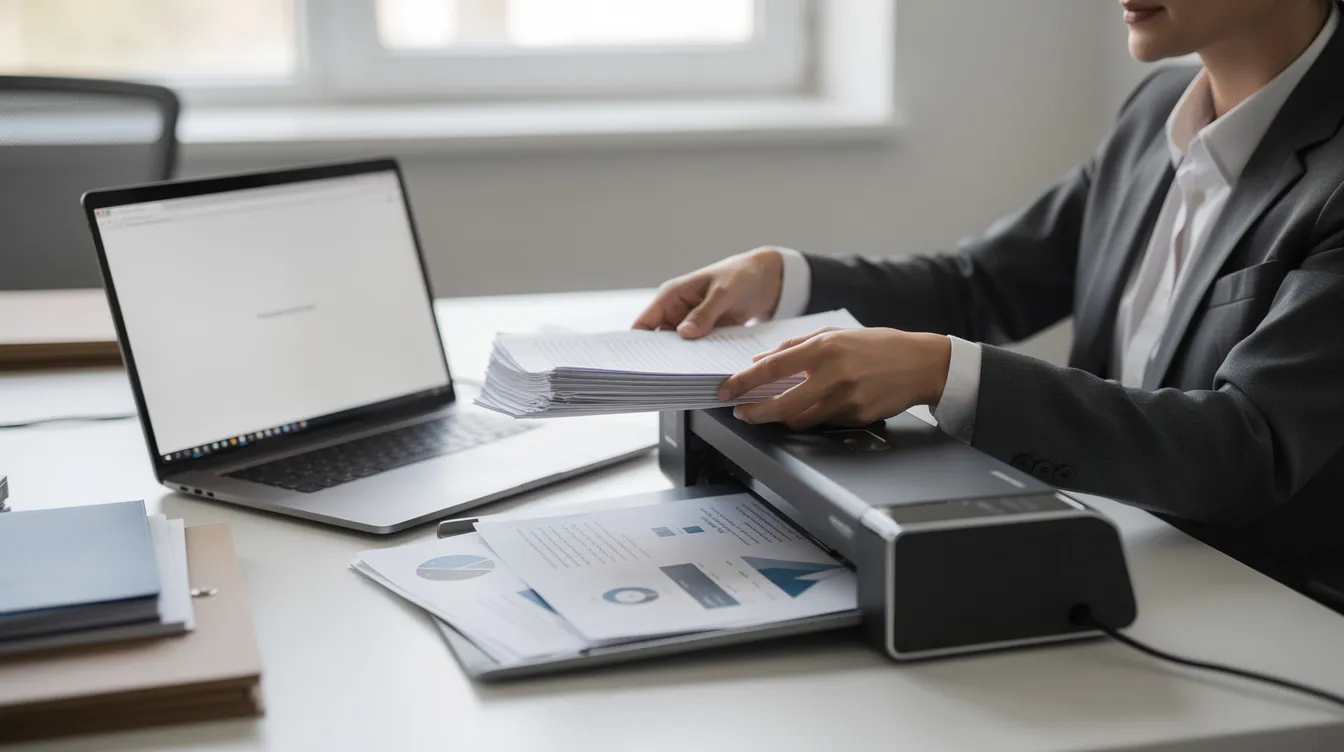
A modern document journey usually looks like this across document workflows: scanning, OCR, cleanup, translation, DTP, and final bilingual or multilingual delivery. OCR software processes documents in distinct phases to interpret content, and an OCR engine uses text recognition, advanced image analysis, artificial intelligence, and machine learning to process images and extract text.
First, the OCR software analyzes PDFs, images, faxes, and unstructured documents. Then text extraction is cleaned: broken lines are fixed, headings are tagged, language support is checked, and the content is prepared to translate text through human translation, MTPE, or CAT tools.
After translation, desktop publishing restores tables, graphics, columns, and branding. Foliage Solutions integrates OCR with translation memory and QA so future updates in multiple languages are faster, more consistent, and easier to manage across translation workflows.
Core OCR Use Cases in Multilingual Documentation
Different departments rely on OCR for different translation needs. Legal firms use it for scanned legal documents, NDAs, sworn statements, court filings, arbitration records, and certified translation where clause numbering must remain accurate.
Finance teams and financial institutions use OCR-based invoice processing for vendor invoices, purchase orders, bank statements, and audited reports. Automated data entry refers to automatically pulling names, amounts, and dates from various documents to speed up workflows.
Technical teams convert scanned manuals, SOPs, engineering files, and safety instructions into editable formats for multilingual maintenance documentation. Marketing teams use OCR for old brochures, print ads, and historical brand assets. Life sciences teams use it for clinical trial documentation, IFUs, product leaflets, and healthcare providers’ lab reports.
Key OCR Software, Technologies, and Tools Used in Translation Projects
This section names common tools, not one-size-fits-all endorsements. Tesseract OCR is an open-source OCR engine used in custom workflows, especially for batch processing and pre-translation cleanup. Adobe Acrobat is often used when clients send image-based PDFs that need rapid conversion into editable text.
Cloud Vision and similar APIs can process large document sets across multiple languages; Google notes that its document text detection can identify multiple languages in one file. Cloud and AI APIs use advanced machine learning to extract key-value pairs and complex table data from documents.
Enterprise document management systems may already incorporate OCR, allowing easy integration with localization workflows instead of duplicating work. Common OCR features in these tools and enterprise systems include batch upload, form capture, searchable archives, intuitive interfaces, a clean user interface, and advanced features for workflow automation.
Benefits of OCR in Professional Translation Services
OCR is no longer optional in professional translation services because it is central to speed, cost control, and high quality translations. OCR technology significantly enhances productivity by automating data entry processes, which reduces the time and labor required for manual data handling across various industries.
By converting printed or handwritten materials into digital formats, OCR eliminates manual data entry, saves time, reduces errors, and makes information more accessible and manageable, thereby streamlining workflows.
Modern OCR systems utilize advanced algorithms powered by artificial intelligence and machine learning, enabling them to recognize and convert printed or handwritten text into digital data with high accuracy, which minimizes errors and accelerates workflows. Modern OCR systems can process vast amounts of documents in a fraction of the time required for manual data entry, which accelerates workflows and increases overall productivity, contributing to cost savings.
Handling Complex Layouts, Languages, and Unstructured Documents with Advanced Image Analysis
Real business documents are messy: stamps, signatures, tables, handwriting styles, mixed scripts, and graphics can all appear on one page. Complex documents require ocr capabilities that preserve reading order, footnotes, columns, and tables.
For unstructured documents, OCR output can feed post-processing scripts or document management tools that identify headings, sections, and form fields. OCR technology plays a key role in automating form processing by identifying fields and extracting structured information from various form types, allowing businesses to integrate this data directly into databases without manual entry.
Some files contain transcripts of spoken language, such as hearings or interviews. OCR supports scanned transcript translation, while professional interpreters and native speakers may still be needed for context, accessibility, American sign language needs, or complex tasks beyond printed text.
Multilingual OCR has improved for Arabic, Cyrillic, Asian scripts, and mixed-language files, but quality checks remain essential. Foliage Solutions uses linguistic QA, visual checks, and test extracts to confirm that OCR output is complete before certified professionals begin translation.
OCR and Translation Services for Regulated and Technical Industries
Life sciences, finance, legal, education, manufacturing, and energy all depend on audit-ready records. The versatility of OCR technology allows it to be applied across various industries, including healthcare, finance, legal, and education, each benefiting from its capabilities in unique ways.
In legal workflows, scanned contracts and case files require accurate OCR before sworn or certified translations. In finance and insurance, policy files, investor reports, and KYC / AML records need bulk translation and multilingual reporting.
In healthcare, patient leaflets, protocols, lab reports, and medical claims must be processed with precision. Technical manufacturing teams digitize legacy machine manuals, engineering diagrams, and safety instructions for global plants.
Foliage Solutions specializes in these domains by combining OCR preparation with technical expertise, experienced Desktop Publishing team, and strict compliance standards.
How Foliage Solutions Uses OCR to Strengthen Multilingual Projects
From Foliage Solutions’ perspective, OCR is a foundational technology for clients that need a comprehensive range of multilingual services through a global network. We support document processing, specialized translation, MTPE, DTP, proofreading, accessibility, and inclusive language for numerous industries.
Foliage Solutions’ OCR solutions include scan-quality checks, recognition, validation, and preparation for reviewers. The process helps enhance efficiency, enable communication, and create efficient workflows for organizations with recurring language needs.
Accessibility refers to powering screen readers by translating scanned text into spoken words for the visually impaired. OCR technology significantly contributes to making information accessible, particularly for individuals with disabilities, by enabling assistive technologies such as text-to-speech systems. OCR can transform texts into braille, further supporting inclusivity and ensuring that information is accessible to everyone, regardless of their physical abilities.
Once digitized, content can support mobile apps, mobile technology, customizable solutions, searchable archives, and digital transformation. OCR technology enables the creation of searchable digital archives by extracting text from image-based and PDF documents, allowing users to search for relevant files quickly and accurately across large volumes of documents.
If scanned files slow your localization work, Foliage Solutions can help review your current workflow and coordinate an OCR strategy with translation optimization in mind. Let’s get in touch and see if OCR solutions are the right fit for your scanned documents.
FAQs
These questions address practical concerns from project managers, localization teams, and documentation owners.
What types of files should I send for OCR and translation?
You can send PDFs, TIFFs, JPEGs, scanned images, and more. Higher-resolution scans, ideally 300 dpi or above, produce better OCR and translation results. If editable Word, InDesign, or PowerPoint files exist, send those first to avoid unnecessary rework.
Can OCR handle handwritten text in multiple languages?
Modern OCR can recognize some structured handwritten text, especially in forms, but printed text is still more reliable. Critical handwritten notes on contracts, lab records, or approvals should be checked manually by linguists. Foliage Solutions advises on best practices for capturing handwritten information with minimum risk.
Does using OCR increase or reduce my overall translation costs?
Yes. OCR reduces total cost by eliminating the need for retyping and enabling the reuse of translation memory. Once a scanned file is digitized, updates and new language versions can be produced faster and more affordably.
How accurate is OCR for complex layouts, like tables and diagrams?
High-quality OCR tools capture many tables and structured sections, but complex diagrams or design-heavy brochures may need manual DTP. For critical data, such as financial tables or technical specifications, Foliage Solutions combines OCR with expert desktop publishing before translation begins.
How does OCR affect project timelines for urgent multilingual work?
In practice, OCR often speeds up delivery because translators can work with clean, segmented text. At Foliage Solutions, we can parallelize OCR, translation, and DTP processes to meet urgent regulatory or product launch deadlines efficiently.