
Multilingual desktop publishing (DTP) is not just a complementary service, it’s a key component in delivering complete, production-ready solutions for global clients.
As demand for localisation continues to rise, DTP becomes indispensable in ensuring that translations are not only accurate but also visually aligned, culturally resonant, and ready for immediate distribution across multiple markets.
Addressing complexities with precision in DTP

Experienced LSPs are already aware of the challenges associated with multilingual DTP—from working with non-editable file types and right-to-left (RTL) scripts to adapting layouts for languages with text expansion or contraction. These complexities are routine, but they still demand specialised handling.
Whether it’s reflowing complex InDesign layouts, ensuring font compatibility for Asian scripts, or restructuring a technical manual with dozens of callouts, having skilled DTP artists on hand ensures that formatting supports, not undermines the quality of your translations.
Enhancing workflow efficiency
Incorporating multilingual DTP into the localisation workflow improves delivery speed and quality assurance.
Whether internal or partner DTP teams, LSPs can eliminate post-delivery reformatting for clients, reduce the risk of formatting errors, and align content presentation with the target market’s expectations, right from the start.
When translation, DTP, and QA are integrated, you can automate layout reassembly using tools like Adobe InDesign with .idml files, manage large projects more efficiently, and offer a more agile service to clients operating across different geographies.
Optimised output for multiformat content
LSPs often receive content in a wide variety of formats—from editable InDesign or FrameMaker files to flattened PDFs, scanned technical diagrams, or interactive eLearning modules.
A reliable multilingual DTP setup can accommodate all of these, ensuring accurate and consistent output regardless of format.
This is especially vital for multilingual publishing in industries like manufacturing, life sciences, education, and software, where client expectations include print-ready or digitally interactive files that meet stringent formatting requirements across languages.
RTL, Asian Scripts, and graphic-heavy layouts
Translating into Arabic, Hebrew, Farsi, or Urdu come with structural layout implications that DTP professionals must anticipate and manage.
For Asian scripts like Chinese, Japanese, and Korean, font rendering, kerning, and vertical typesetting can be critical considerations.
Additionally, when working with technical illustrations, infographics, or dense documentation, translation companies benefit from multilingual DTP specialists who can redraw or relabel complex visuals, align multilingual callouts, and maintain document integrity across languages, ensuring nothing is lost in translation or design.
DTP for eLearning, UI, and multimedia assets
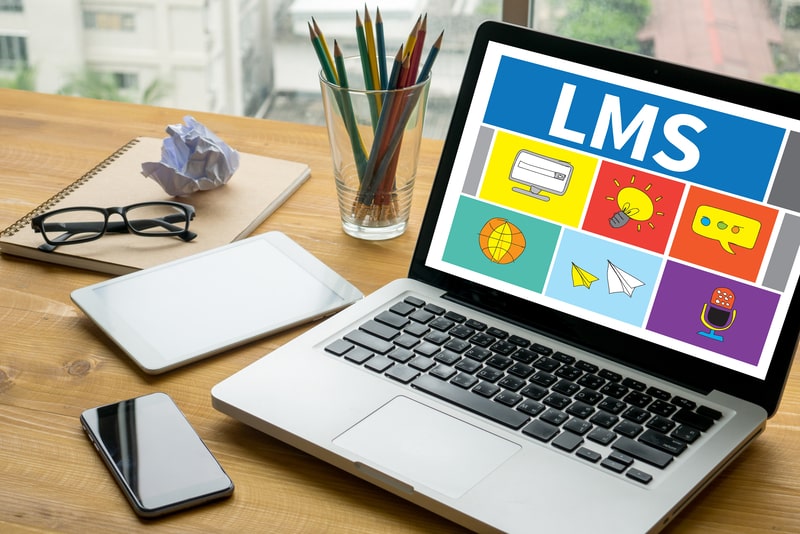
Beyond print and documentation, many LSPs are increasingly tasked with localising eLearning modules, multimedia content, and user interfaces.
Here, multilingual DTP ensures that subtitles, call-to-action buttons, labels, and in-course visuals align with the translated language without breaking interactivity or design.
Whether using tools like Articulate Storyline, Adobe Captivate, or HTML-based authoring platforms, integrating DTP into multimedia localisation means clients receive not only accurate translations but fully adapted experiences for global learners and users.
Quality assurance: a competitive differentiator
DTP is not simply a post-processing step. It’s an extension of your commitment to quality.
In multilingual projects, ensuring alignment, hyphenation, paragraph breaks, and image placement is just as important as linguistic accuracy.
CAT tools support terminology consistency, but it is the hands-on review by DTP experts that guarantees layout precision and brand cohesion.
For translation companies looking to differentiate themselves, offering robust DTP with multi-tier QA protocols sends a clear signal: you deliver end-to-end excellence.
Choosing the right DTP partner or setup
Whether building an internal team or outsourcing to specialists, LSPs need DTP providers who understand both the localisation process and design standards.
Prioritise partners who work seamlessly with your preferred tools, support multiple file formats, and can meet tight turnaround times without compromising quality.
Scalability is also essential. As translation volumes grow or client campaigns become more complex, DTP capacity should scale with it, supporting everything from one-off projects to enterprise-wide global rollouts.
Summary

Multilingual desktop publishing is a core value-add that enables translation companies to deliver more complete, polished solutions to global clients. It transforms words into fully formatted documents and ensures that every translated message is clear, professional, and visually aligned with brand and cultural standards.
Offering top-tier multilingual DTP isn’t a bonus—it’s a baseline for delivering global-ready content that meets the expectations of modern international brands in today’s competitive localisation landscape.
Frequently asked questions (FAQs)
How does multilingual DTP benefit translation companies specifically?
It allows translation companies and LSPs to offer end-to-end solutions, reduce time-to-market, control formatting quality, and increase client satisfaction by delivering production-ready materials.
Which industries require multilingual DTP the most?
Manufacturing, life sciences, software, education, legal, and marketing sectors commonly require DTP for manuals, packaging, brochures, eLearning, and compliance documentation.
What makes RTL and Asian language DTP particularly challenging?
These languages often require layout mirroring, script-specific fonts, and unique formatting considerations like vertical typesetting or character spacing adjustments.
What tools are essential for DTP in a localisation workflow?
Adobe InDesign, FrameMaker, Illustrator, Photoshop, and OCR tools like ABBYY FineReader are key, alongside CAT tools for maintaining terminology consistency. Check out some of our main tools we use on this page.
Is it better to build an internal DTP team or work with a partner?
It depends on the company’s scale, volume, and service model. Small to mid-sized LSPs often benefit from outsourcing to specialised DTP providers, gaining access to advanced tools and expertise without the overhead of building internal capacity. Larger LSPs may choose to develop in-house teams for tighter workflow integration, but even then, they frequently collaborate with external DTP partners to handle overflow or support complex multilingual layouts at scale. A hybrid approach offers flexibility, ensuring maximum availability and punctual turnaround times.